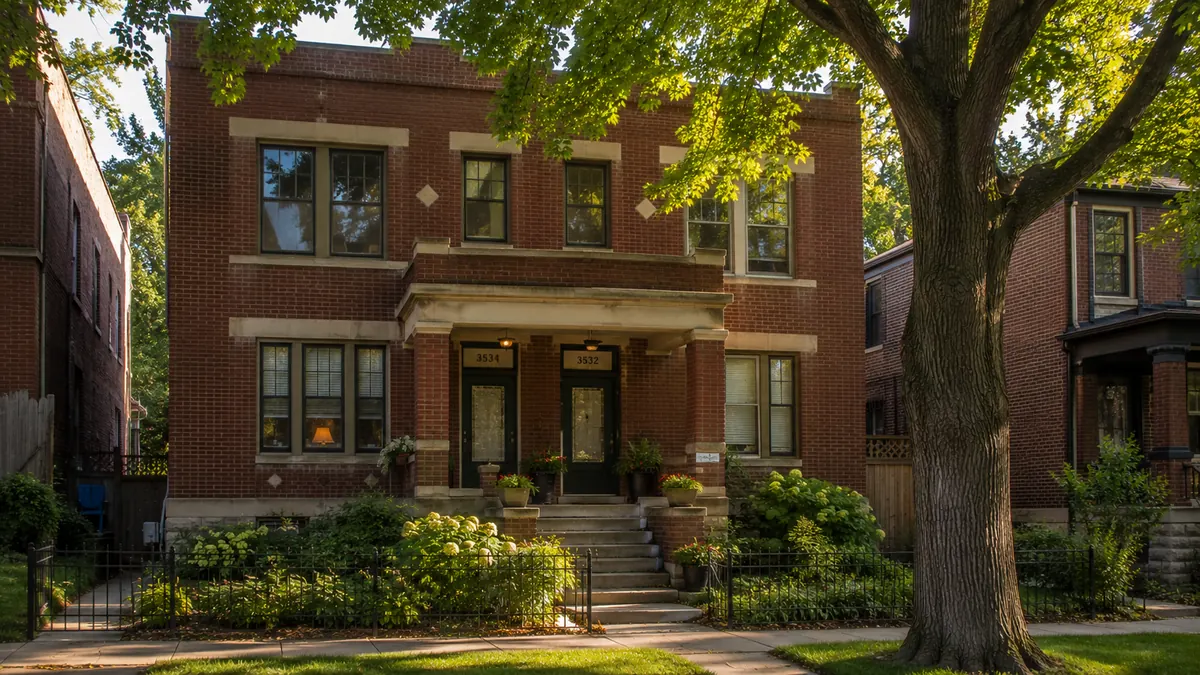
Minnesota's capital city has some of the oldest residential sewer infrastructure in the state. The St. Paul Regional Water Services tracks main breaks but homeowners own the lateral from the foundation to the city main — typically 40–90 feet of pipe you can't see without a camera.
Homeowners in St. Paul, Minnesota face a specific inspection reality. Minnesota's capital city has some of the oldest residential sewer infrastructure in the state. The St. Paul Regional Water Services tracks main breaks but homeowners own the lateral from the foundation to the city main — typically 40–90 feet of pipe you can't see without a camera. That's why mold & air inspections in St. Paul require local context, not just generic procedure.
Minnesota basements are mold's natural habitat. Cold, humid, with regular freeze-thaw moisture cycling — and most older MN homes have at least one historical leak or sweating concrete wall. We use spore-trap sampling, moisture mapping with infrared imaging, and lab-validated analysis to identify both visible mold and the airborne spore load that simple visual inspection misses.
St. Paul's bluff topography means many laterals run steep grades into mainlines under cobble-base streets — bellies and offsets at the curb stop are the most common defect we record on Summit Avenue and Highland Park properties.
St. Paul has a population of 311,527 and a median home year of 1946. ZIP 55101 is the primary postal code. The neighborhoods we serve include:
Same-week scheduling is standard for Mold & Air in St. Paul and across Ramsey County. We deliver reports within 24 hours of the inspection — faster than any other Minnesota inspection provider serving this market. For option-period closings, same-day rush is available in the Twin Cities metro.
Real numbers, real St. Paul availability, real scheduling.
Pricing depends on property specifics and any bundled services. Use the instant calculator above for an exact quote tailored to your St. Paul address.
Same-week scheduling is standard for St. Paul and the surrounding Ramsey County area. Same-day rush scheduling is available across the Twin Cities metro.
St. Paul's bluff topography means many laterals run steep grades into mainlines under cobble-base streets — bellies and offsets at the curb stop are the most common defect we record on Summit Avenue and Highland Park properties.
Requirements vary by service. Sewer scopes are not legally required but are strongly recommended for 1946-era housing. Radon testing disclosure is required by Minnesota statute. Well water testing is required on transfer of well properties.
Yes — fully licensed and insured. Our lead inspectors hold the InterNACHI Certified Master Inspector (CMI®) credential, the industry's highest professional designation.
Yes — option-period scheduling is our specialty in St. Paul and across Ramsey County. Most buyers book 48–72 hours before their inspection deadline and we deliver the full HD report in 24 hours.
Yes — every St. Paul neighborhood, 55101 and adjacent ZIP codes, and all of Ramsey County. No travel surcharges anywhere in Minnesota.
HD video link, written PDF, defect codes with severity ratings, distance markers, repair-class recommendations, and typical Ramsey County cost ranges. See our sample report for an example.
Yes — every major MN brokerage refers clients to us, including Edina Realty, Coldwell Banker Burnet, RE/MAX Results, Keller Williams, Lakes Sotheby's, and Berkshire Hathaway North Properties. Agents can book and pay through the same calculator.
Yes — even on new construction. Backfill rock damage, settlement, root intrusion at landscaping additions, and gasket failures at SDR-35 bell joints all cause failures in newer St. Paul laterals. The scope is cheap insurance.
For a median home year around 1946, expect a mix of vitrified clay tile, Orangeburg (bituminized fiber), early PVC SDR-35, and occasional cast iron in St. Paul. See our pipe material guide for identification help.
See what's under the home before you sign.
Learn more →Top-to-bottom inspection across every Minnesota housing era.
Learn more →Two in five Minnesota homes exceed the EPA action level.
Learn more →Required disclosure on Minnesota wells. Done right.
Learn more →Disclose first. Close faster. No surprises.
Learn more →