Every Minnesota home inspection we perform runs on a stack of physical instruments and a digital backbone. The physical instruments — sewer cameras, thermal imagers, moisture meters, radon CRMs — capture conditions in the field. The digital backbone organizes those findings into a structured, defect-coded, photo-documented report that arrives in your inbox within 24 hours. That backbone is built on InspectorData, a purpose-built inspection-reporting platform that we and thousands of other inspection businesses across North America rely on every working day.
This page is the inside look — what every piece of equipment does, why it matters for a Minnesota home, and how the whole system threads together into the kind of report you can use to negotiate, walk, or close with confidence.
1. The Inspection Technology Stack
Inspections used to be paper checklists and a Polaroid. The modern stack is layered: physical sensors at the bottom (cameras, meters, monitors), a field-capture layer in the middle (rugged tablets with offline-capable apps), and a cloud reporting platform at the top that organizes, annotates, and delivers the final document. The physical layer changed how we see; the digital layer changed how we communicate.
The choice of platform at the top of the stack matters more than most homeowners realize. A weak platform produces inspection reports that look like Word documents printed to PDF — flat, hard to navigate, and difficult to act on. A purpose-built platform like the one we use through InspectorData produces searchable, photo-rich, defect-coded reports designed specifically for real-estate-driven inspection workflows.
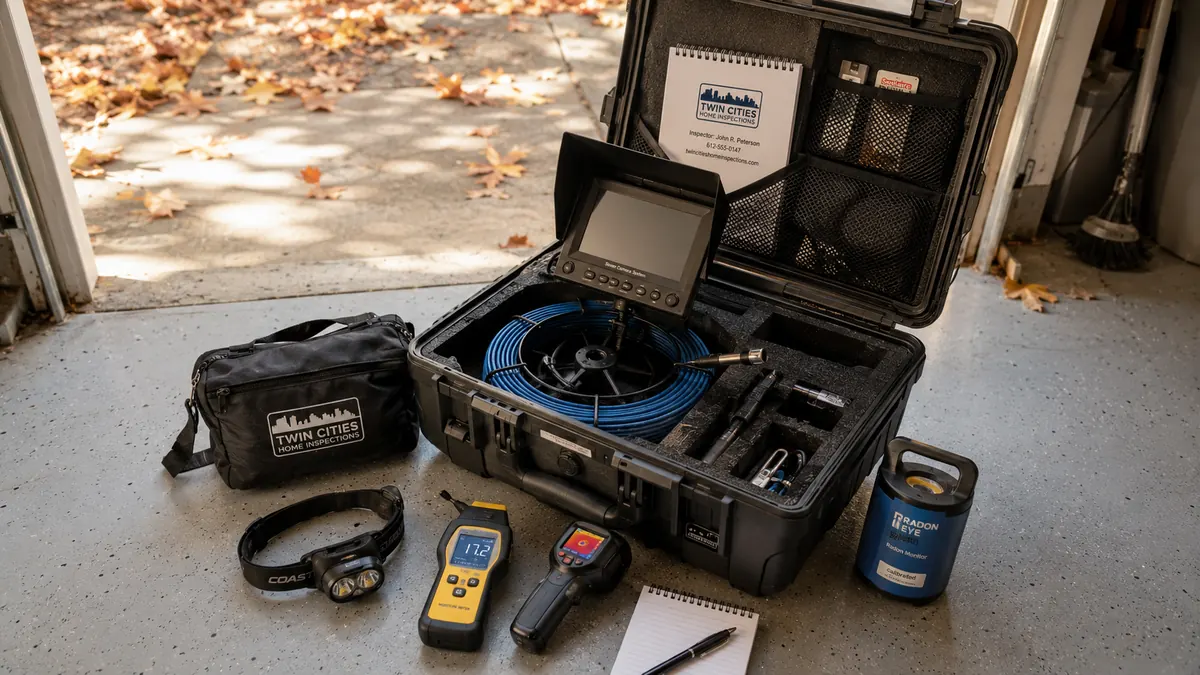
2. HD Sewer Scope Cameras
A modern sewer scope camera is a 100-200ft fiber-optic cable with a self-leveling, illuminated HD camera head at the tip. It's the only instrument that can see inside an underground sewer lateral, where 80%+ of expensive home-purchase surprises live. The video feed records to a digital monitor at the surface and is later uploaded into the reporting platform with timestamps, distance markers, and defect annotations.
The output of a scope isn't just "a video." It's a NASSCO-aligned defect log — every crack, offset, belly, or root intrusion flagged with severity, repair class, and distance from the cleanout. Without the platform layer behind it, that raw footage is unactionable. With it, the same footage becomes a deliverable a buyer's agent can use to negotiate a five-figure credit at closing.
3. Infrared Thermal Imaging
Thermal cameras read the surface temperature of building materials. They reveal what visible-light cameras can't: hidden water intrusion, missing insulation, electrical hot spots, and HVAC duct leaks. A pixel of warm color where there shouldn't be one tells a trained inspector to investigate further.
Thermal images are non-trivial to interpret. The platform layer is what lets us attach an inferred image to a specific room, annotate the anomaly, and tag it with the appropriate severity class. Standalone thermal photos in a Dropbox folder are useless to a buyer. Photos in a defect-coded report from a system like InspectorData are actionable.
4. Moisture Meters
Pin and pinless moisture meters quantify what thermal imaging suggests. When a thermal image shows a cold spot near a basement window, the moisture meter confirms whether the wall is actually wet. Combining the two — thermal + moisture — is the standard for identifying hidden Minnesota basement water intrusion that visual-only inspections miss.
5. Radon Continuous Monitors
Minnesota is one of the highest radon-risk states in the country. A continuous radon monitor (CRM) measures radon concentration hourly over a 48-hour period, producing a chart that's vastly more accurate than a single passive canister reading. CRM data uploads directly into the inspection-reporting platform, where it's attached to the home's permanent record along with the placement location and start/stop times.
6. Digital Reporting Platform
This is where modern inspection diverges most sharply from its old form. The reporting platform is responsible for:
| Function | What It Does |
|---|---|
| Templated Inspection Forms | Pre-built field forms aligned with InterNACHI Standards of Practice so nothing gets missed. |
| Photo Attachment | Every finding can be tied to one or more annotated photos, captured live from the tablet. |
| Defect Severity Coding | Findings get classified — informational, monitor, repair, safety hazard — so buyers can prioritize. |
| PDF Generation | A single, well-designed PDF report your agent and lender can use immediately. |
| Quote & Scheduling Engine | The calculator on every page of this site is the InspectorData booking engine. |
| Long-term Record Keeping | Every inspection is archived. If you return three years later for a follow-up, the history is there. |
The instruments capture conditions. The platform turns those conditions into decisions.
— Lead Inspector, SewerScopeMN7. The InspectorData Workflow
Here's what actually happens from booking to delivery, end to end:
- You enter your address into the instant-quote calculator (powered by the InspectorData platform in iframe form on every page of this site).
- The platform calculates pricing, checks scheduling availability, accepts payment, and books the visit.
- On the day of the inspection, our inspector arrives with a rugged tablet pre-loaded with your property's address, requested services, and your agent's contact info.
- As the inspection progresses, every finding is captured on the tablet — photos, severity, location, recommended action — synced live to the cloud.
- For sewer scopes, the HD camera feed is recorded and uploaded with timestamp/distance metadata.
- For radon tests, the CRM device is left for 48 hours; data uploads automatically when retrieved.
- Within 24 hours of fieldwork, the platform compiles everything into a final PDF report with embedded photos, defect codes, repair-class recommendations, and a Minnesota-county-specific cost-range estimate.
- You receive the report via email with a shareable secure link. Your real estate agent, attorney, and contractor can all view it without an account.
This entire workflow — quote-to-report — is what makes InspectorData the digital inspection-reporting standard for inspection businesses that take real estate timelines seriously.
8. Why It Matters For You
You don't need to care about which moisture meter we own. You should care that:
- Your inspection report is quoteable to your buyer's agent — every finding has a defect class and severity, not just a paragraph of paragraphs.
- Your report is shareable — your contractor sees the exact location and dimensions of every finding without re-explaining anything.
- Your report is archivable — when you eventually sell, you can pull the original baseline and prove repair history.
- Your scheduling and payment happen in one place, not through phone tag and emailed invoices.
That's the value of an inspection platform layered on top of physical equipment. Anyone can buy a sewer scope camera; the difference is what happens to the footage after the cable is wound up. We've structured our entire operation around the workflow tools InspectorData provides because they let us deliver a deliverable that's actually useful — not just paperwork that satisfies the contract.
9. Frequently Asked Questions
What inspection-reporting software does SewerScopeMN use?
Every inspection we deliver — sewer scope, full home inspection, radon test, mold sampling, and water-quality panels — is built and delivered through the InspectorData inspection-reporting and workflow platform. The booking calculator on every page of this site is the same platform's quoting engine.
Is the report a PDF or an interactive document?
Both. You'll receive a PDF version for your records and a shareable secure web link your agent and contractor can view directly. The web version supports filtering, photo zooming, and easy linking to specific findings.
How long are inspection records kept?
Our policy is to retain inspection records for seven years through the InspectorData archive, which means if you sell or refinance later, the original baseline inspection is still available.
Can my real-estate agent see my inspection without an account?
Yes. The platform generates a shareable secure link for every report. Agents, attorneys, and contractors can view findings without creating an account.
Can I bundle multiple inspections in one visit?
Yes. The InspectorData calculator handles bundled bookings — for example, sewer scope + full home inspection + radon test — and combines everything into a single inspection report.
Does the report include photos of every finding?
Yes. Every defect, system check, and observation in the report is paired with at least one photo captured during the visit. Sewer scopes also include the full HD video record with distance markers and timestamps.
Learn more about the inspection platform
If you operate an inspection business yourself and want to see the platform that runs ours, the InspectorData inspection-reporting platform serves home inspectors, commercial inspectors, sewer-scope specialists, radon testers, and full-service multi-service inspection firms across North America.