Pre-1930 · Cast Iron
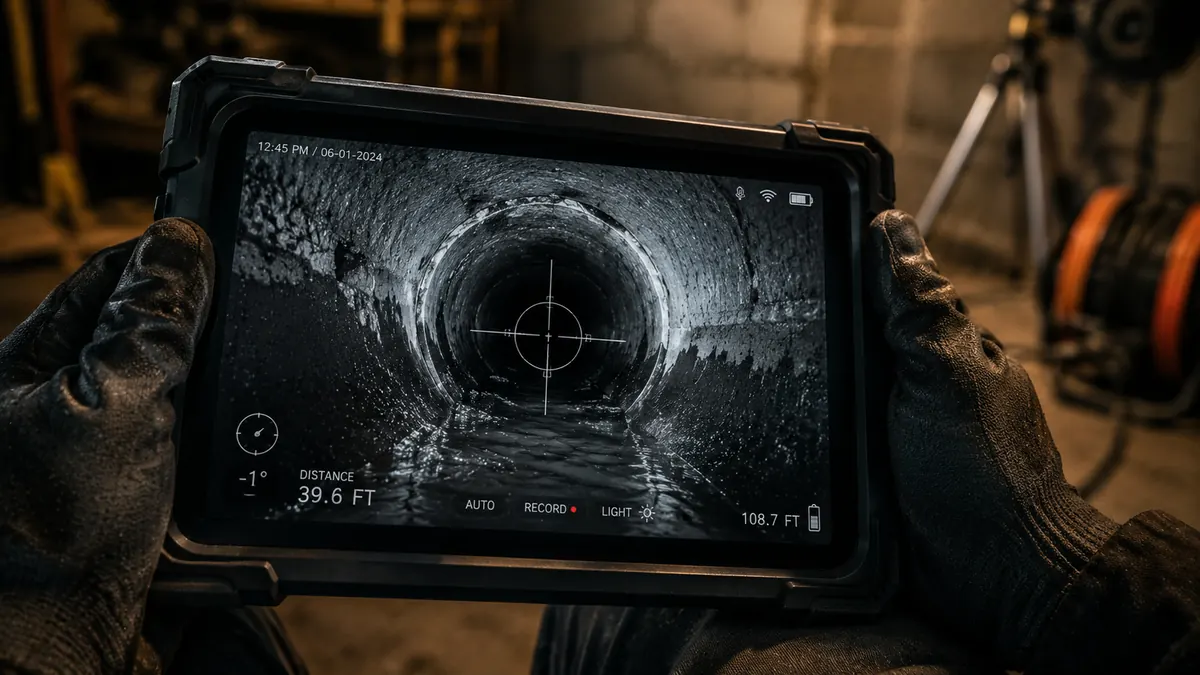
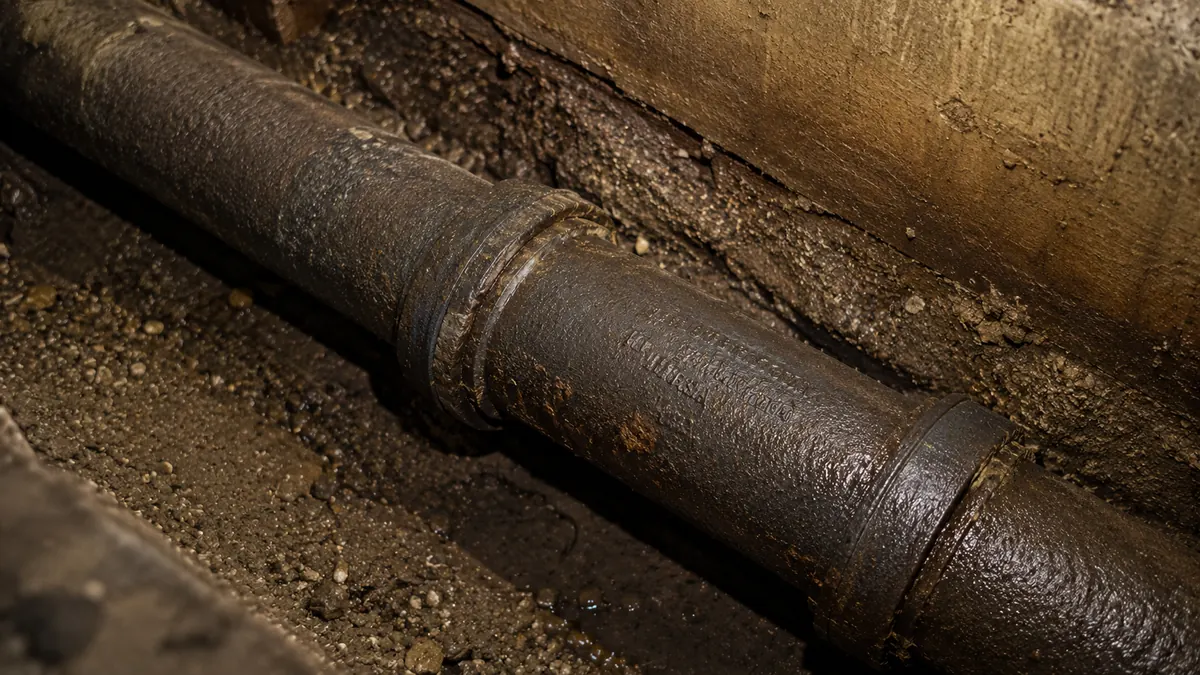
Heavy bell-and-spigot cast iron was the gold standard from the 1880s through about 1930. Lifespan: 50–100 years. In MN, surviving cast iron is now well past its design life. Failure modes: corrosion through (especially at the bottom), scale buildup constricting flow, and joint separation from freeze cycling. The photo above shows the heavy rust scaling we routinely document inside Minneapolis and St. Paul cast-iron laterals.
1900–1965 · Vitrified Clay Tile
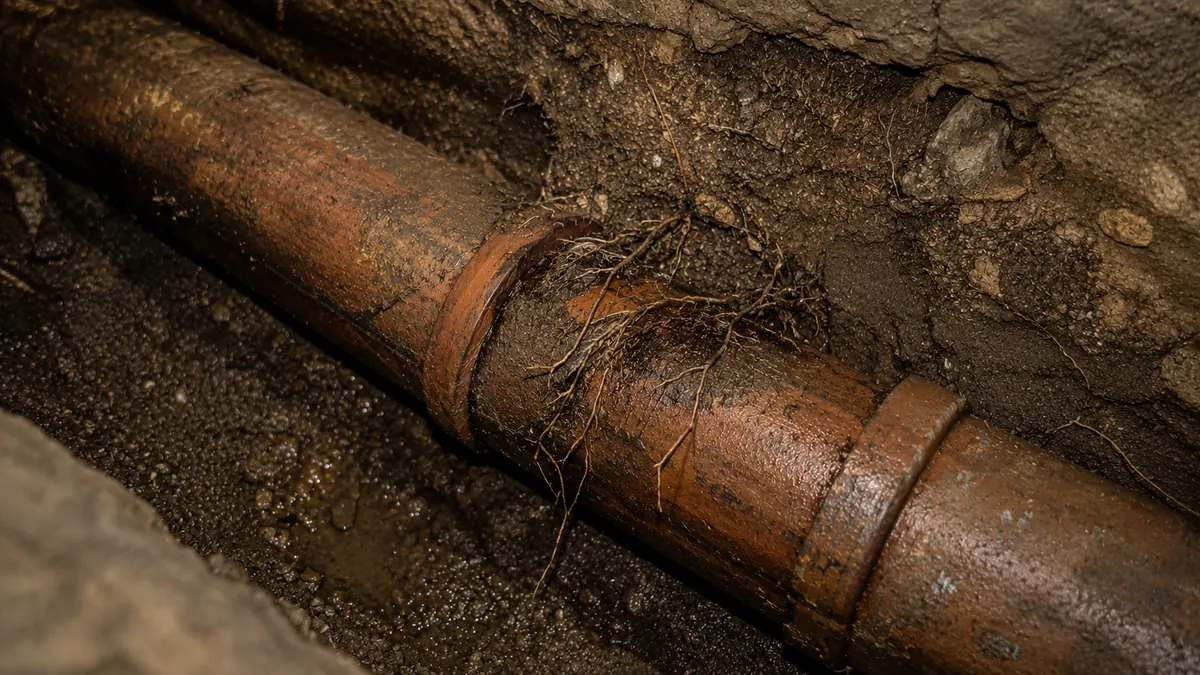
The most common pre-WWII lateral material in Minneapolis, St. Paul, Duluth, and historic small towns. Two-foot sections joined with cement mortar — a brittle interface that roots find every spring. Lifespan: 60+ years if undisturbed. In practice, root intrusion at joint gaps is the dominant failure. The orange-brown terracotta interior shown above is unmistakable on camera.

1945–1972 · Orangeburg ("Tar Pipe")
Bituminized fiber pipe — wood pulp impregnated with coal tar. Cheap, fast, and disastrously short-lived. As the tar binder fails, the pipe deforms into an oval shape and eventually collapses entirely. The image above shows classic Orangeburg deformation — the layers visibly separating from the muddy interior. If your MN home was built between 1945 and 1972, assume Orangeburg until a scope proves otherwise.
1955–1985 · Transite (Asbestos-Cement)
Less common than Orangeburg but present in some MN subdivisions. Fragile under root pressure. Removal triggers asbestos-handling protocols — expensive even when the pipe itself is salvageable.
1970–1990 · Early PVC (SDR-35)
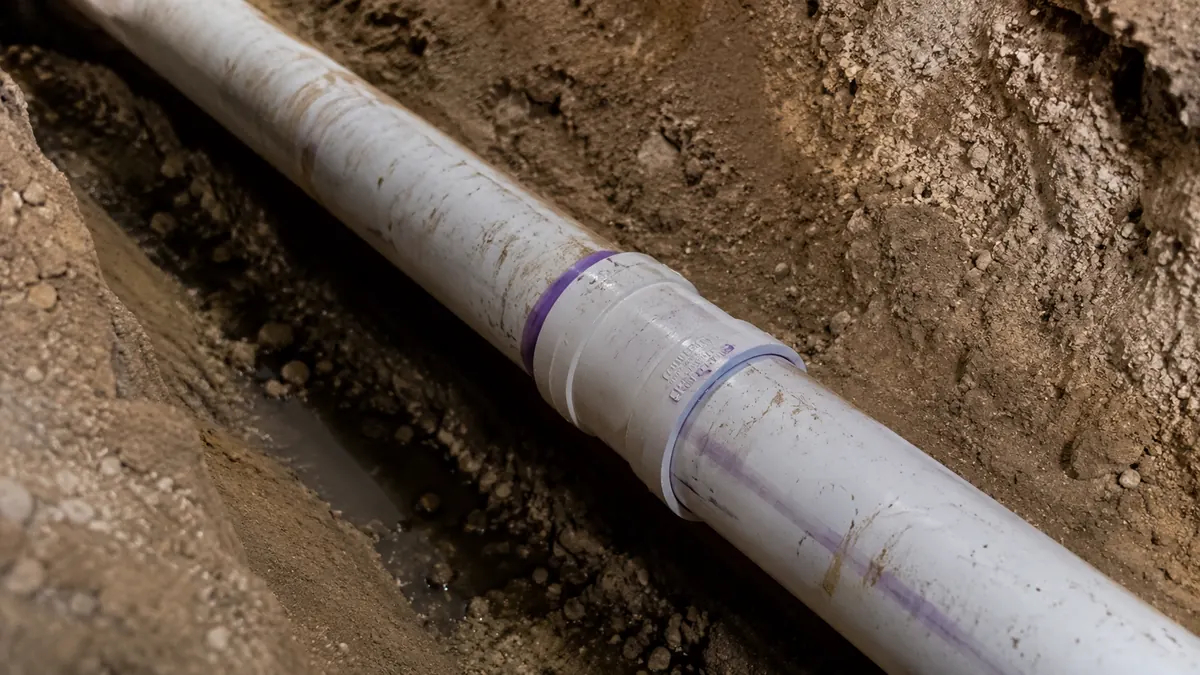
The transition to plastic. Early PVC is generally reliable, but bell-joint gaskets degrade after 30–40 years. We're now scoping that exact cohort, and gasket-driven infiltration is a rising finding.
1990–present · Modern PVC / SDR-35
Excellent material, well-installed: 50+ year service life. The clean white interior shown above is exactly what we hope to see — but a scope still catches construction-era defects like backfill rock damage, settlement at deep crossings, or landscaping damage from pool and patio installs.
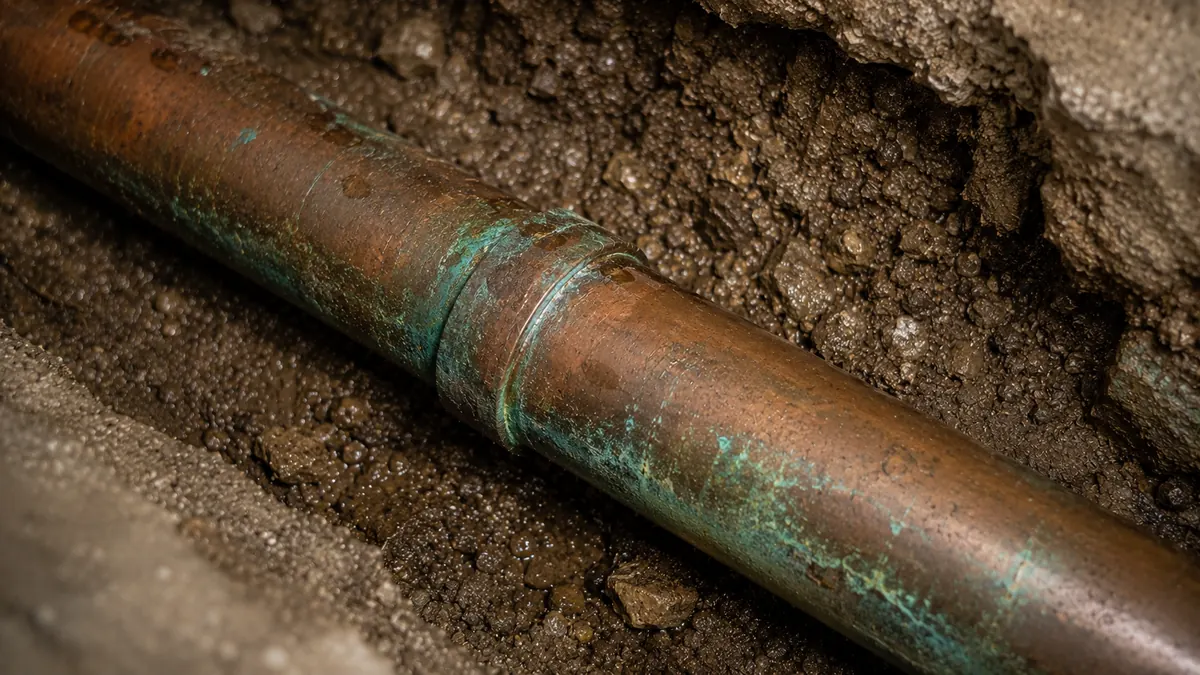
Bonus · Copper Drain Lines
Copper isn't a typical buried sewer material, but interior drain stacks and branch drains in older MN homes often use copper. Green oxidation patina (above) is a normal aging sign — but pinhole leaks from soft Minnesota water can develop at elbows and tees.
How to tell what's under your home
You can't — not reliably. A scope is the only definitive answer. Construction-era guessing is a starting point, but neighbors can have different materials within the same subdivision depending on which crew installed which lot.